














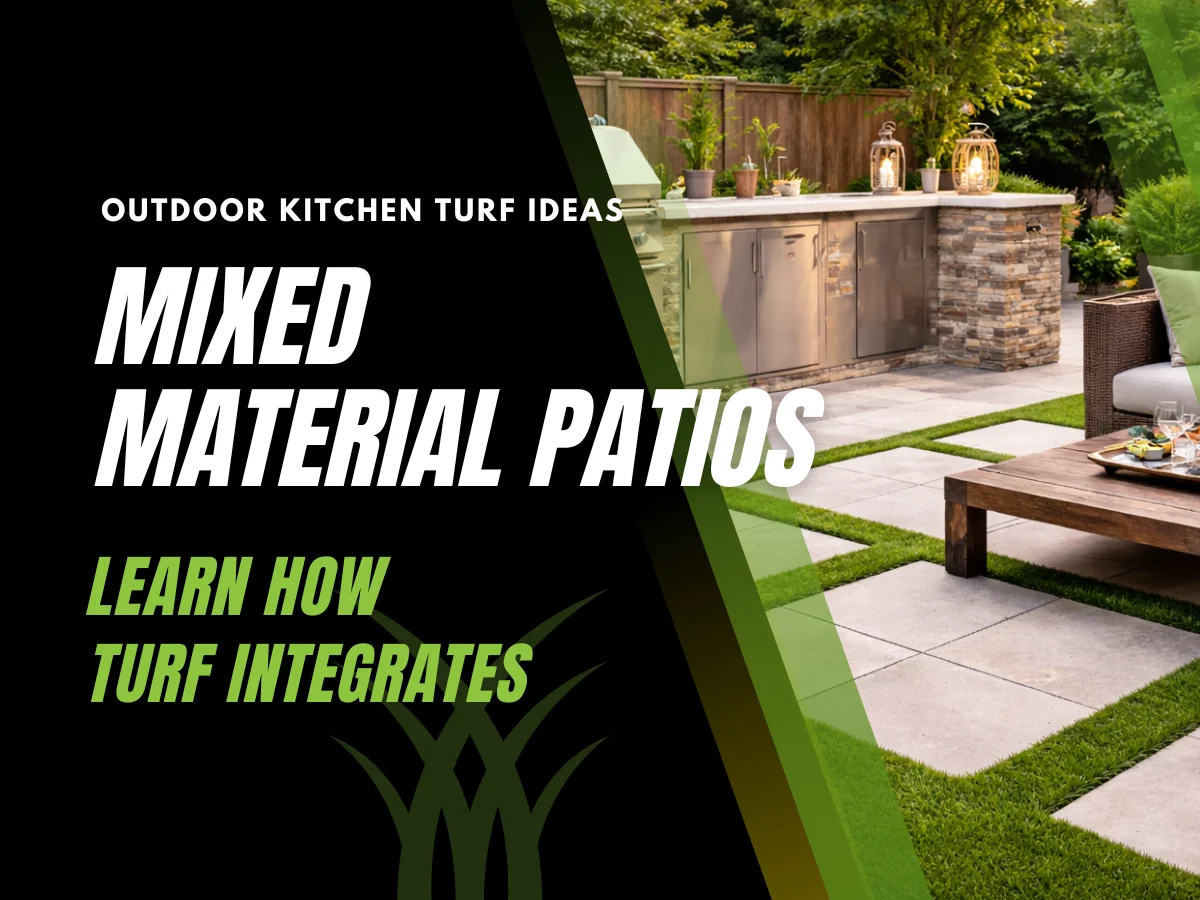
In high-end outdoor design, turf is often not given serious consideration, but it can be the small material detail that helps unify mixed surfaces.
From paver inlays to poolside areas, this guide on artificial grass for landscape designers lays the groundwork for creative planning. Plus, AGL’s infill-free artificial grass is at the heart of many standout outdoor kitchen turf ideas, showing up in grill surrounds, lounge corners, and multi-surface patios.
For architects, designers, and contractors creating multifunctional yards or high-use entertaining areas, artificial grass improves both the visual impact and functionality of outdoor builds.
Here’s how to integrate artificial grass into mixed-material spaces that combine stone, decking, tile, and more while maintaining durability, drainage, and a beautiful design finish.
Why Artificial Grass Works in Mixed-Material Spaces
Artificial turf brings softness, contrast, and low-maintenance to outdoor spaces that lean heavily on stone, wood, or concrete. When paired correctly, it connects different materials visually while maintaining structural balance.
- Softens hardscapes: Turf balances out angular surfaces and hard lines with texture and greenery.
- Cooler underfoot: Unlike sun-soaked stone or concrete, artificial grass doesn’t scorch bare feet.
- Mud-free and mess-free: Especially important near kitchens, seating areas, and high-traffic transitions.
- Visual alignment: Breaks up dense material groupings without disrupting continuity.
Outdoor kitchen turf ideas often live or die by the details and this is where professional install and high-quality materials make all the difference.
For a closer look at how infill-free turf performs under real-world conditions, check out our no infill artificial grass feature. Infill-free turf is especially valuable here because there are no rubber pellets to scatter, no silica to track through kitchens, and no debris collecting in seams or grout lines.
Turf Ideas for Landscape Designers: Creative Layouts
Turf is flexible for most layouts. Its versatility allows it to adapt to a range of visual styles and material combinations. Here are a few commonly used combinations:
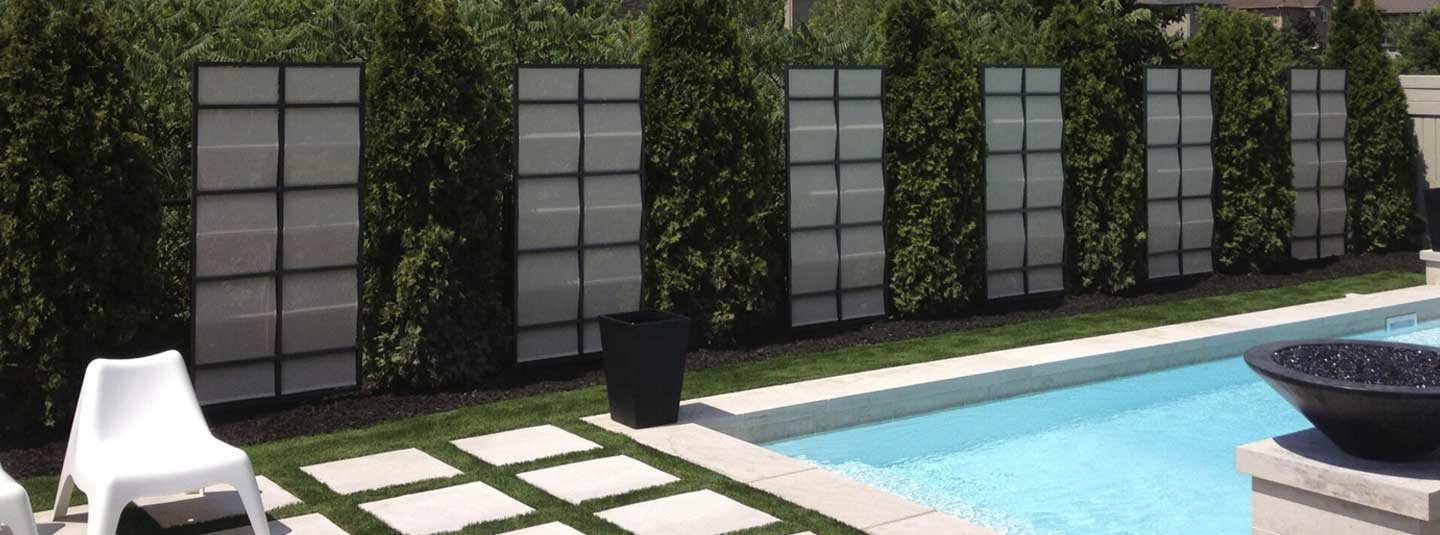
- Grid layout: Turf lines between large-format concrete pavers in a tight, symmetrical grid create a modern, structured appearance. Ideal for high-end patios and entertaining areas.
- Organic contrast: Use artificial grass as filler between irregular flagstone or natural-cut pavers. This suits rustic or transitional designs that need softness without formality.
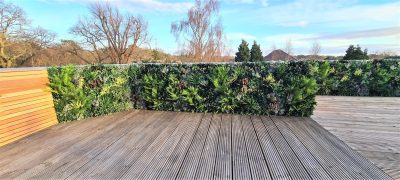
- Framed rooftops: On rooftop patios, turf inlays help break up deck boards or tile sections, adding warmth without heavy structural changes.
Each approach adds dimension while making surfaces easier to walk on and use. It fits right into outdoor builds that balance appearance with durability.
Integration Tip #1: Framed Turf Between Pavers or Slabs
Framed turf strips between large-format pavers is a go-to design move in hardscape planning. The contrast draws the eye, and the installation is repeatable.
- Best suited for: Courtyard walkways, artificial grass for grill areas, and transitions between entertaining surfaces.
- Best materials to pair: Oversized concrete pads, modular stone slabs, or porcelain tiles.
- Install notes: Turf should sit flush with the hard surface to prevent tripping. Use edging or hidden anchoring to maintain no visible lines.
This approach offers geometric structure with natural contrast. It’s a great fit for clients looking for a comfortable, low-maintenance surface treatment.
Integration Tip #2: Turf as a Functional Edge Detail
Artificial grass isn’t the focal point, but what it does is define the edges and help keep mixed-material layouts clearly structured. Using turf as a buffer or edge element can solve layout problems while adding softness where it matters to most people.
- Pool borders: Prevents mud tracking and adds non-slip texture.
- Deck edges: Reduces soil runoff or mulch mess beside wood or composite decking.
- Wall bases or elevation drops: Softens transitions and helps manage runoff.
AGL’s artificial grass performs particularly well because it drains vertically, resists matting, and avoids the heat buildup common in rubber-filled systems. Even narrow strips remain usable and tidy through seasonal changes.
Integration Tip #3: Synthetic Turf for Lounge Areas
Not every entertaining space needs full artificial grass coverage. A well-placed inset area can change how the space is used.
- Lounge platforms: Add a daybed or hammock area directly onto turf.
- Play surfaces: Create barefoot-friendly spots for kids or pets. And for families wondering about health standards, here’s why artificial grass is safe for kids.
- Quiet corners: Turf is ideal for yoga, stretching, or shaded reading spots.
These areas break up harder surfaces and encourage casual use without overcomplicating the design. Because AGL grass withstands daily use, chairs, and cushions, it keeps appearance without maintenance.
Curious about long-term cost comparisons? You can estimate lifetime benefits using our artificial grass calculator.
What Makes AGL Turf Ideal for Mixed-Material Patios
When grass is being used near furniture, food, water, and people, performance matters. AGL Grass is built for demanding mixed-use applications:
- Infill-free by design: No loose rubber or silica to manage near food or walkways.
- Durable and high-tuft bind: Resists wear from furniture legs and foot traffic.
- Quick-drain construction: Water passes through easily to avoid pooling. That drainage performance isn’t theoretical. Field-tested systems like AGL’s match industry benchmarks, with turf draining at over 30 inches per hour per square yard.
- Antimicrobial protection: Helps limit bacteria in damp or shaded areas.
- Low-glare finish: AGL’s matte surface reduces reflection and blends with natural materials.
These features make AGL suitable for high-traffic installs where cleanability, comfort, and appearance are all priorities.
Spec Tips for Mixed-Surface Projects
Professionals incorporating turf into multi-material spaces should focus on install accuracy and transitions. These tips help ensure a professional and lasting result:
- Use edging strips or hidden staples: Keeps transitions tight and secure.
- Flush heights matter: Select turf height that finishes level with tile or stone.
- Avoid glossy turf: Select a product with a matte surface for a more natural look.
AGL turf comes in wide rolls and cuts easily, making it easy to fit custom layouts, from narrow strips to large framed fields.
Installer Considerations: Smart Coordination for Smarter Builds
For contractors and landscape professionals, turf is a logical add-on. When planned early, it improves the finished build without extending the timeline.
- Base prep syncs with patio work: If you’re already prepping compacted limestone for hardscapes, the turf base is already in process.
- No specialty crew needed: AGL’s infill-free turf installs perfectly with standard tools.
- Reduces callbacks: Proper edge restraint and drainage help minimize client concerns later on.
Turf can be included in the project timeline alongside lighting or irrigation planning. It installs at the finish phase without creating any delays.
Avoid These Turf Mistakes in Mixed-Material Installs
Artificial grass delivers an integrated look when installed properly. Avoid these common issues to ensure long-term performance:
- Incorrect turf height: Mismatch with hardscape can cause tripping or drainage problems.
- No edge restraints: Turf may shift or fray without proper securing.
- Improper base prep: Poor drainage leads to odor and surface damage.
- Overly shiny turf: High-gloss finishes look artificial in natural or mixed-material settings.
Backyard Concept: Turf in a Multi-Material Outdoor Entertaining Area
Picture this: a 700 sq. ft. backyard designed for entertaining, relaxation, and family use.
- Main patio: Poured concrete with a built-in outdoor kitchen and grill island.
- Turf buffer strip: A 2-foot turf band surrounds the grill area to catch grease and separate surfaces.
- Decked lounge platform: A raised wood deck with a firepit. Turf fills the steps for visual separation.
- Pet-friendly patch: A 5×8 ft. turf area near the gate makes cleanup simple and always stays green.
This layout puts outdoor kitchen turf ideas into motion by improving both the look and utility of the space. It’s also a perfect example of how artificial grass for outdoor kitchens can be installed without disrupting surrounding finishes.
Add These Outdoor Kitchen Turf Ideas to Your Next Build Package
When planning a rooftop kitchen, ground-level lounge, or custom courtyard, artificial grass is a practical design element with real application benefits.
AGL Grass provides install resources, dealer support, and high-performance turf products that integrate seamlessly into any project. So, what now?
- Join the Certified Partner Program for access to samples, specs, and planning support
- Incorporate turf as part of your build package for outdoor kitchens, seating areas, or pool surrounds
Oh, and use these outdoor kitchen turf ideas as a launch point for spaces designed to stay low-maintenance and comfortable, no matter the layout.