














Not every contractor or designer feels comfortable selling. And with AGL Grass, they don’t have to.
Turf is one of the easiest outdoor upgrades to recommend, especially for contractors that need artificial grass, where the results are easy to show. This guide walks through how to offer turf as an upgrade during walkthroughs, design reviews, and quote conversations, without pushing or overselling.
Why Turf Is One of the Easiest Upsells in Outdoor Projects
Contractors and designers rarely need to convince clients that low-maintenance landscaping is a win. Most homeowners already want clean spaces that don’t require mowing, watering, or weekend upkeep. Turf delivers all of that with no maintenance headaches and a yard that looks the same season after season.
AGL’s turf also integrates cleanly into other project elements:
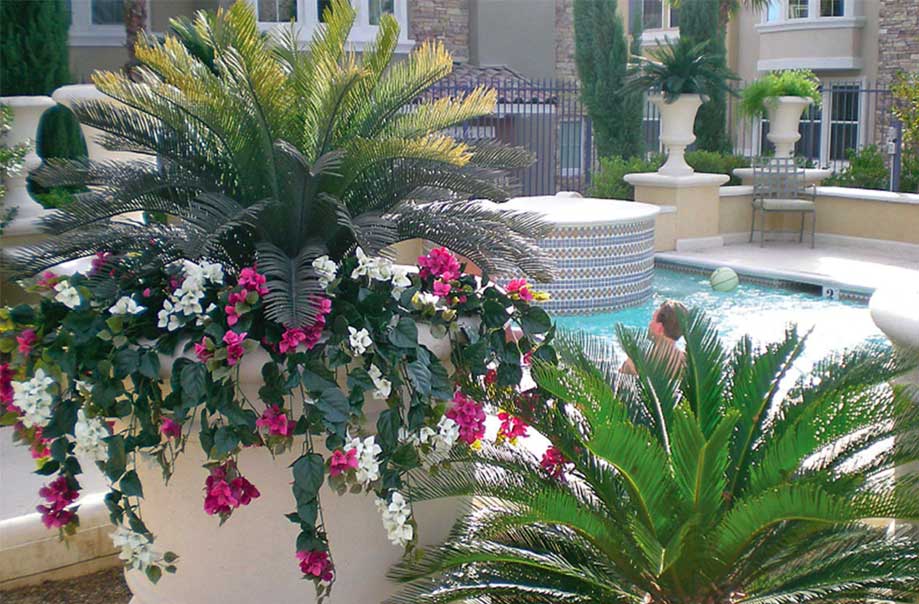
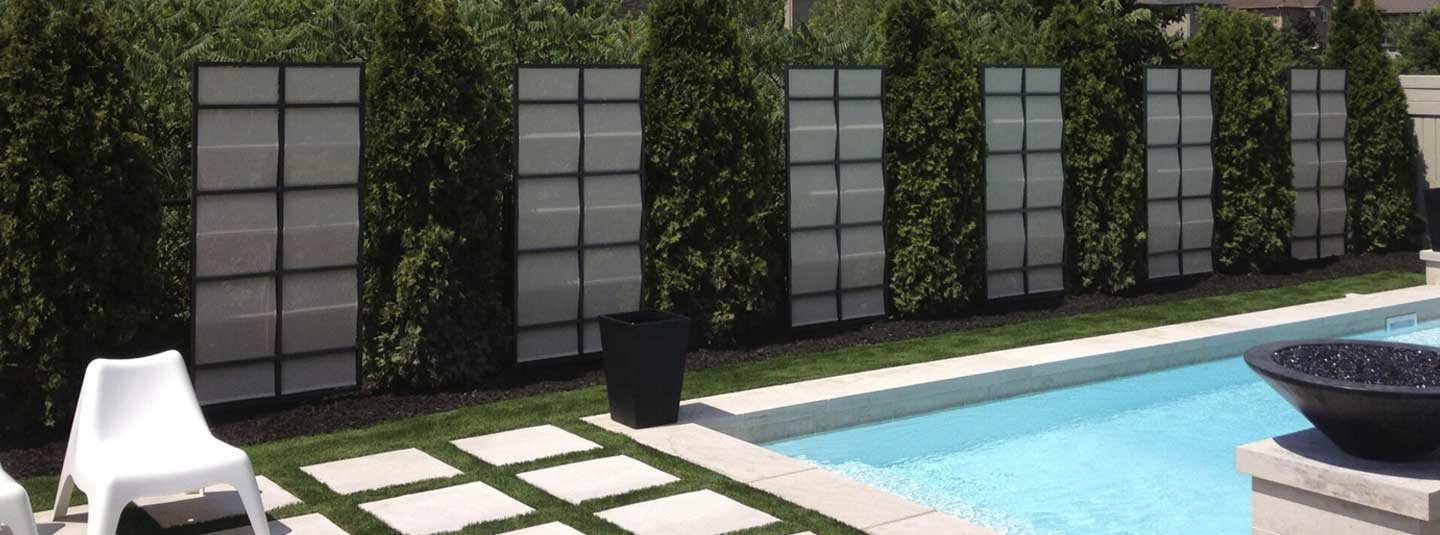
- Around patios and pools
- Between stepping stones or hardscaping
- Along narrow side yards or sloped areas that are hard to mow or plant
- In high-use areas that struggle to grow grass
Once a client sees turf installed, it clicks. The upgrade rounds out the install and ties things together.
What Stops Most Contractors from Pitching Turf
Even though turf is an easy visual win, some contractors hesitate to bring it up. Common reasons include:
- Not wanting to sound like they’re upselling
- Feeling unsure about the timing or how to phrase it
- Assuming the client isn’t interested or it’s outside the budget
But turf often solves a visible problem. If a side yard is always muddy, or a lawn won’t grow no matter how often it’s seeded, turf is a practical option worth pointing out.
Why Knowing How to Offer Turf as an Upgrade Builds Trust
Most homeowners expect you to point out design challenges and offer smart, straightforward ways to address them. That’s what builds trust.
When you recommend turf to clean up a muddy slope or simplify a hard-to-mow edge, it’s no different than suggesting drainage, edging, or a better material. It’s just another tool that keeps the install low-maintenance.
Letting the client decide while giving them something they can picture right away keeps the conversation professional.
When to Bring Up Turf During a Project
Turf fits naturally into different phases of the project:
During site walkthroughs:
- “This area gets a lot of wear. We could turf it and remove the maintenance issue altogether.”
- “This slope won’t grow grass well, but turf would stay green year-round.”
During material selection:
- When pairing with pavers, decking, or fence lines: “This would look clean and sharp with turf between the stones.”
During scope changes or upgrades:
- “If we’re already doing the patio, it’s a good time to add turf beside it. No extra crew needed.”
Knowing how to offer turf as an upgrade in these moments keeps the suggestion practical and well-timed.
Mini Walkthrough Scenario
Let’s say you’re quoting a backyard upgrade: a new paver patio, some fencing, and landscape lighting. During the site visit, you notice the side yard is shaded and muddy. You say, “We’ve done turf in this kind of space before because it stays clean and green, and it stays intact where grass usually wears out.”
Later, when reviewing materials, you show a quick photo of a similar install. Now the idea is visual and that’s half the job when you know how to offer turf as an upgrade.
Selling Artificial Turf: Talk Tracks That Show How to Offer Turf as an Upgrade
Here are some simple phrases contractors use to introduce turf during client discussions:
- “This side yard is always muddy. Turf here would stay clean year-round.”
- “No mowing, no mud, and it doesn’t flatten or wear, even with regular foot traffic.”
- “Let me show you what the turf actually looks and feels like.”
- “Clients like this because it finishes the space without adding maintenance.”
See how there’s no sales pitch? We’re just valuable insights from past experience.
Let the Product Do the Work: Practical Sales Aids for Selling Artificial Turf
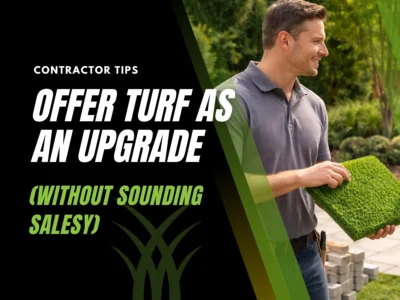
Bring a turf sample to every site visit. Let clients touch it, walk on it, and picture it in the space.
If you’re selling artificial turf and want clients to really see the benefit, use visuals like:
- Before-and-after photos of real installs
- Videos showing turf in use (e.g., pets, kids, furniture)
- CAD renderings or mockups for designers
If you’re meeting remotely, have a quick deck on hand. Even 15-second clips from previous jobs can make it real. You can also leave behind small sample boards or swatch kits to help clients visualize turf as part of the total design.
Show it in place. That does more than any explanation.
Handling Objections
Some clients just want straight answers:
“Will it look fake?”
“Here’s a sample in natural light. We also have finished project photos.”
“Is it safe for pets or kids?”
“AGL turf is 100% non-toxic and doesn’t use loose fill.”
“Will it hold up over time?”
“Same turf used in schools and rooftops. Drains quickly and doesn’t trap debris or waste.”
Why Infill-Free Makes This Conversation Easier
AGL Grass is infill-free:
- No rubber particles to rake or replace
- No shifting sand or compacting layers
- No mess, no heat retention
It installs faster, drains better, and reduces callback risk. That matters on both sides of the project, especially if you’re working with artificial grass with no infill as your go-to material.
Real-World Scenarios That Make Turf an Easy Win
Turf fits best when it solves a real, visible issue. These examples show where the conversation tends to start naturally, without needing to push:
- A side yard that won’t grow grass
- A client who says they want “low maintenance landscaping”
- A family with dogs and mud-tracking issues
- A high-use area where clients want a consistent look from one surface to another
These are the spots where turf fits naturally. And when you know how to offer turf as an upgrade, clients usually get it right away.
Contractor Turf Install Support and Earning Repeat Business
Turf reduces maintenance and minimizes complaints. Clients talk about how clean it stays and how much easier their yard is to manage. That builds referrals and it’s part of a broader trend. According too DataBridge Market Research, the North American turf installation market topped USD 1.17 billion in 2023 and is projected to grow nearly fivefold by 2031.
For contractors offering turf regularly, it also highlights the value of solid turf install support; whether it’s getting help with materials, client questions, or install timing.
Positioning Turf as a Value Multiplier
Turf handles foot traffic without wearing out. It softens the edges around pools and patios. It holds up under weather, furniture, and pets.
Designers use it to fill gaps between pavers, concrete, or decking. Property owners like how it stays green without upkeep.
When you show turf as part of the overall layout or finish, not a separate line item, it makes sense.
What Homeowners Notice Most After Install
After the job is done, the small things resonate. These are the kinds of comments that come up again and again once turf is in place:
- “It looks so real.”
- “No more muddy paw prints.”
- “It’s the only part of the yard that always looks good.”
- “Wish we’d done this sooner.”
People usually don’t expect it to change the space this much.
Common Mistakes to Avoid
Most contractors aren’t trying to oversell, they’re trying to provide the best solutions to their clients. But a few easy-to-make habits can get in the way of a smooth turf conversation. Here’s what to watch for:
- Pitching too early
- Assuming budget
- Overexplaining technical details
- Overselling turf benefits
- Not bringing samples
Let the jobsite and the visuals do the talking.
Wrapping Up Your Turf Upgrade Pitch
Turf doesn’t need a pitch. Once you understand how to offer turf as an upgrade, it becomes part of the job and not a tacky sales line. Most clients appreciate the option.