













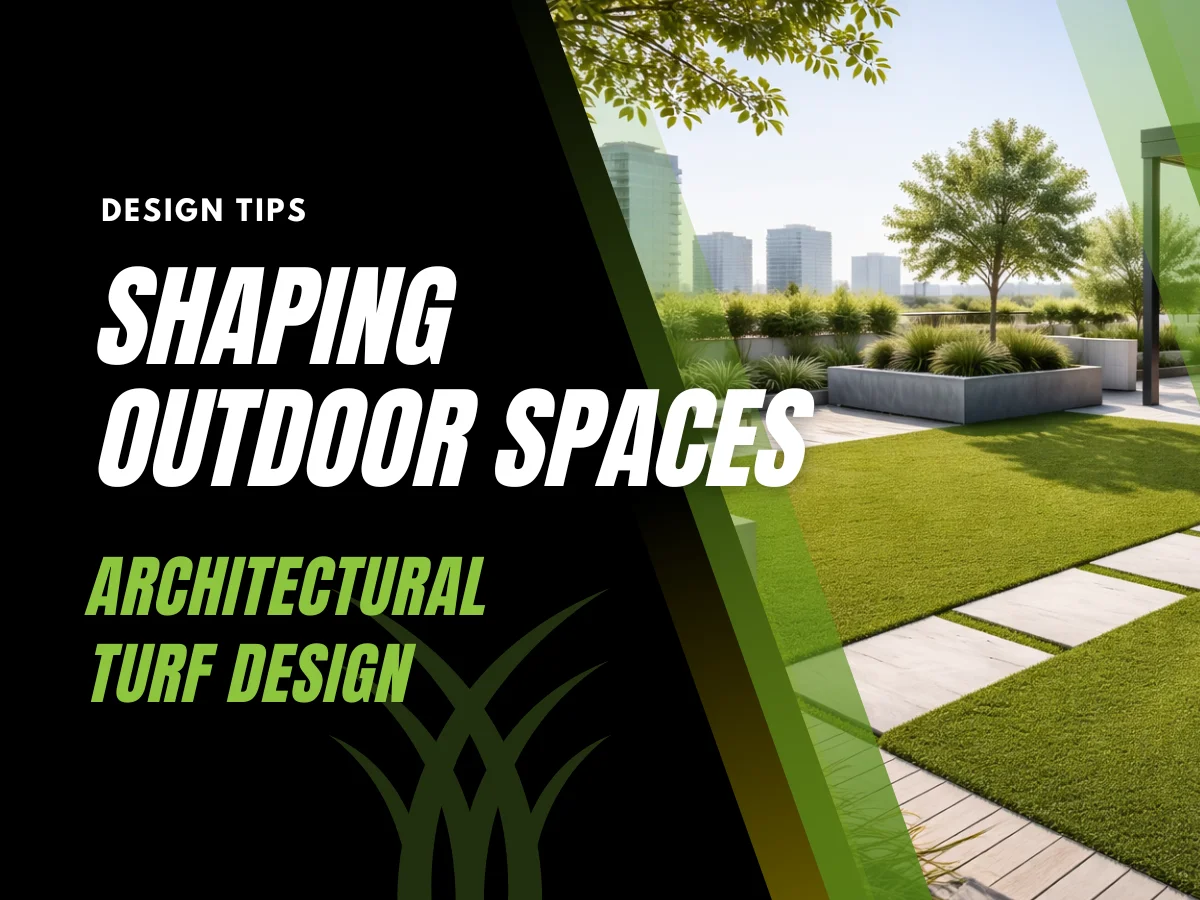
Artificial grass is increasingly used as a defined surface material in outdoor environments. It supports usable, low-maintenance areas on rooftops, patios, and public plazas.
From rooftop lounges to commercial exhibits, architectural turf design has become a practical way to define usable outdoor areas. Architects exploring surface materials for exterior plans can learn more about suitable options through our artificial grass for architects resource.
AGL Grass supports this shift with infill-free, adaptable turf systems that offer consistent visual results, simple maintenance, and detailed installation resources that fit into professional workflows.
With Canada’s artificial turf market exceeding US $393 million in 2024 and forecast to grow nearly 6 % annually, architects are increasingly specifying turf for school courtyards, parks, rooftops, and shared-use spaces. Insights supported by Grand View Research.
Rethinking Surfaces: The Role of Architectural Turf Design
Turf now plays a defined role in outdoor design layouts. It serves as a surface material that contrasts with concrete, stone, or wood, and can function as a safety buffer or soft finish layer in pedestrian areas.
With consistent color and texture throughout the year, turf enables architects to:
- Break up large paved areas with softer visual contrast
- Create layout separations without adding structures
- Add visual definition in shaded areas
- Reduce water use and eliminate the need for chemical treatments
This versatility makes turf a strong option for compact or multi-use spaces where visual and material transitions need to be clearly marked.
Turf Design Ideas for Architects: Where It’s Being Applied Effectively
Rooftops & Terraces
Lightweight and simple to maintain, turf systems are used to soften concrete or paver-heavy roofscapes and support seating, recreation, or light foot traffic.
Common rooftop uses:
- Foam pad installs on rooftop decks
- Informal gathering areas or quiet work retreats
- Material contrast without permanent walls or planter dividers
Design Snapshot: A mid-rise in Austin used AGL Grass over foam underlay to convert an unused rooftop into a stepped outdoor lounge with turf-lined seating and a covered yoga section. The absence of infill helped maintain a clean surface despite heat exposure.
Courtyards & Multi-Surface Layouts
In shared courtyards or retail settings, turf helps separate high traffic pathways from rest or display areas.
It’s commonly installed:
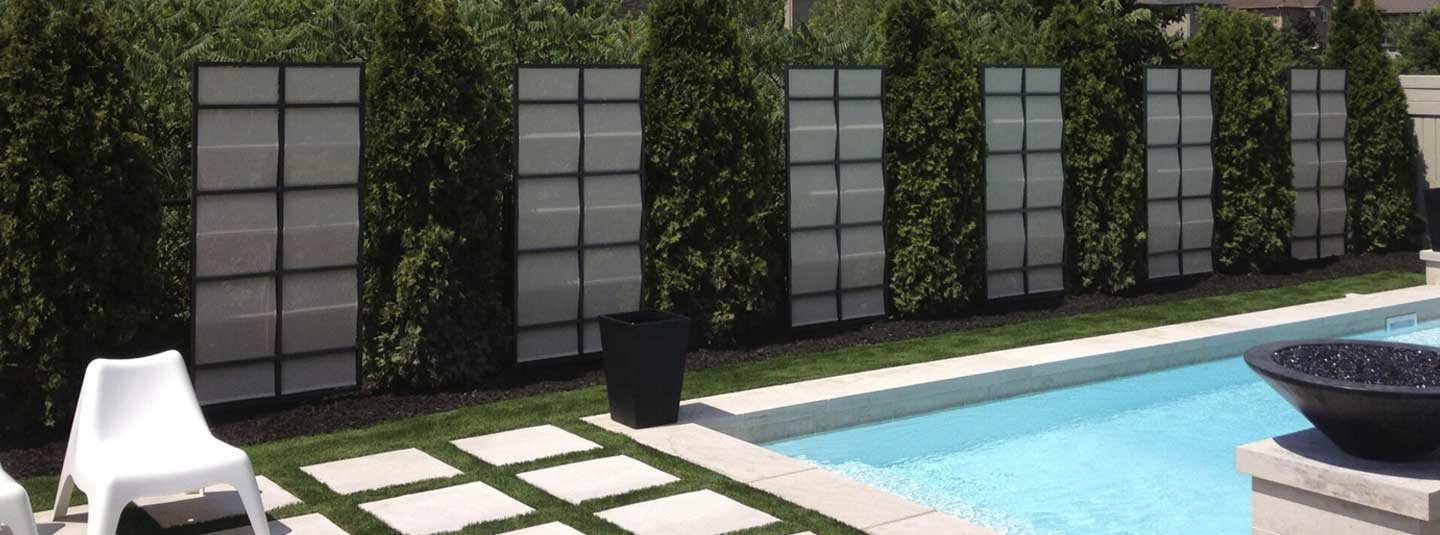
- Between stone pavers or stepping stones
- Beside low walls or planters
- In round, rectangular, or asymmetrical patterns to interrupt continuous hardscape
Design Snapshot: In a civic project in New Jersey, turf was placed between pre-set concrete tiles and wood bench platforms, offering a clean surface that didn’t require irrigation and contrasted with the surrounding stone. This type of integrated layout is a strong example of how architectural turf design can balance material function with visual simplicity.
Retail & Temporary Installations
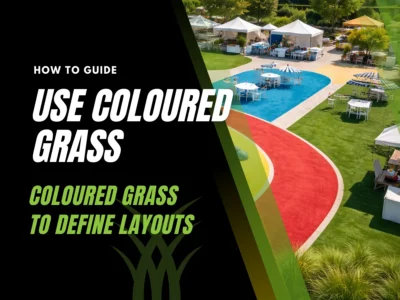
Colored turf is used for event footprints, branded activations, or wayfinding at temporary events.
Examples include:
- Company logos in storefront entries
- Interactive displays in children’s stores
- Trade show flooring with color differentiation
Coloured Turf in Focus: AGL offers a selection of durable coloured artificial grass in school, brand, and event-appropriate tones. These UV-stable options are cut to spec for simple field installation.
School & Civic Spaces
Turf offers a safer alternative to mulch, paint, or rubber in high-use public spaces. It’s color-consistent, doesn’t produce dust, and drains efficiently.
Designers use it to:
- Differentiate surfaces by age group
- Improve visual safety through contrast
- Reduce surface upkeep for municipalities
Design Snapshot: A Toronto school replaced fading painted lines with turf layouts for play areas and transition areas, reducing repainting needs.
Real Examples of Turf in Architectural Use
Globally recognized projects demonstrate how synthetic turf for design is being applied across climates, surfaces, and user types with long-term results.
Projects like these demonstrate how architectural turf design has moved beyond lawn replacement into intentional, plan-driven construction contexts:
- The High Line, New York City: Turf seating elements and resting areas add texture to the hardscape structure and invite informal use of linear space.
- Expo 2020 Dubai: Turf pathways and exhibit footprints offered heat-resistant, fast-draining walkable surfaces in multiple pavilions.
- Children’s Museum of Sonoma County: Turf defines activity spaces for outdoor exhibits, minimizing maintenance while improving safety.
- Meta Headquarters, Menlo Park: Rooftop green areas on multiple buildings include turf to accommodate walking paths and quiet breaks with minimal upkeep.
Key Requirements from Designers and Specifiers
Materials used in public projects must support visual intent and meet performance standards. Architects frequently request:
- Clean seams and edge integration for composite layouts
- Color stability over time
- ASTM-rated safety and ADA-friendly traction
- Effective drainage with low maintenance
- Consistency in surface texture
Detailing Deep Dive: AGL’s turf includes a firm backing system that allows it to trim flush against concrete, stone, or wood. Infill-free construction prevents scattering and supports clean edge detailing in both straight and curved cuts.
How AGL Grass Supports Architectural Turf Design
AGL’s turf lineup is part of a broader shift toward spec-ready turf systems, built to meet architectural and site-level requirements with reliability.
- No Infill Required: Clean install and no particulate migration
- Color Options: Natural greens plus select bold tones
- Spec & CAD Support: Plan sets and diagrams available for all applications
- Dimensional Hold: Withstands foot traffic and seasonal shifts without distortion
AGL turf performs across rooftops, courtyards, and structured outdoor spaces without the mess or inconsistency of traditional infill systems.
CAD Turf Specifications and Tools to Support Specification
Architectural turf design requires more than product selection, it needs integration tools that support technical review, approvals, and final layout.
AGL Grass offers clear integration paths for architects and landscape designers:
- CAD files for product layout and base structure
- Manufacturer cut sheets for approval packages
- Surface prep guidelines for multiple sub-base types
- Access to certified installers for field execution
Planning Tip: Turf areas should be layered into site plans as part of exterior improvements. CADdetails files offer pre-formatted drawing references for rooftop, concrete, and ground-based installs.
These tools help teams stay efficient during plan development and meet review deadlines without compromising the intent behind the architectural turf design.
Bring Turf Into Your Next Project
Architectural turf design plays a defined role in today’s site planning, offering a clean finish, reduced maintenance, and compatibility with detailed construction drawings.
AGL Grass supports you with:
- Color and product sample kits
- CAD and installation diagrams
- Installer partner access in all major markets