














How to Install Artificial Grass
Installing an artificial lawn that lasts, in the long run, needs professional installers. But that doesn’t mean you shouldn’t know how to install turf or artificial grass. In this article, we’ll prepare you for what to expect when you get artificial turf installed at your property.
Our article covers:
- Steps on how to install artificial grass the right way
- Tips on installing artificial turf
- Why artificial turf installation should be handled by professionals
5 Steps for Installing Artificial Grass and Turf
Transitioning from traditional sod to artificial grass is a fairly straightforward process, but it’s good to understand the process. You’ll be able to speak more knowledgeably to your artificial grass installers and ensure your grass installation is coming along nicely.
1. Remove Grass from Surrounding Install Area
Unless you have a strong back and are good with a shovel, a self-propelled turf remover should be used to cut sod beneath the surface. Not only will this save you from doing grueling work for many hours, but when it comes time for sod disposal you won’t have to worry about clean-up.
After the sod has been cut, roll up the cut sod and dispose of it. Here’s a handy tip for checking if the surface has been prepared properly–around four inches of soil should have been removed from your existing lawn.
Afterward, clean up any debris left behind with a landscape rake.
2. Prepare Your Artificial Lawn Base
A solid base is extremely important as it is the foundation upon which the artificial grass is installed.
A minimum of 3” – 4” of limestone screenings is commonly used as a base. A weed barrier can also be installed to help prevent weeds from growing through. Edges of the weed barrier should overlap 1 to 3 inches on each side.
The limestone screenings should then be graded and compacted to desired grades (slightly wet with a hose before tamping/compacting). When done properly, every square foot of your artificial lawn will stay level for years to follow. Failure to do this step effectively will result in long-term challenges.
3. Cut to Size
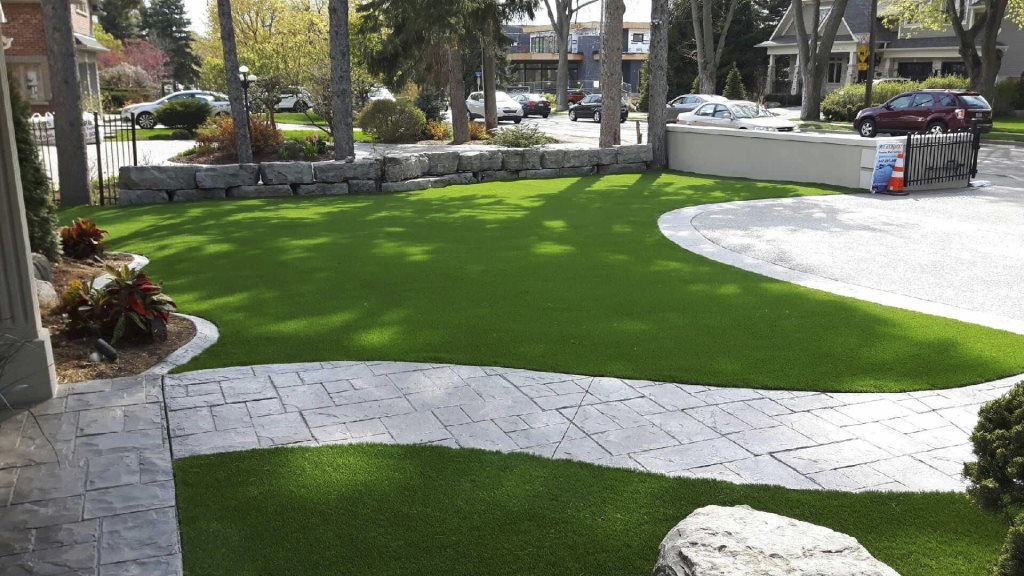
After your artificial grass is in place, a cutting device like a utility knife is used to remove excess turf.
When the borders and corners are approached, ensure that 1/4” to 1/2” spare is left to aid in finishing touches.
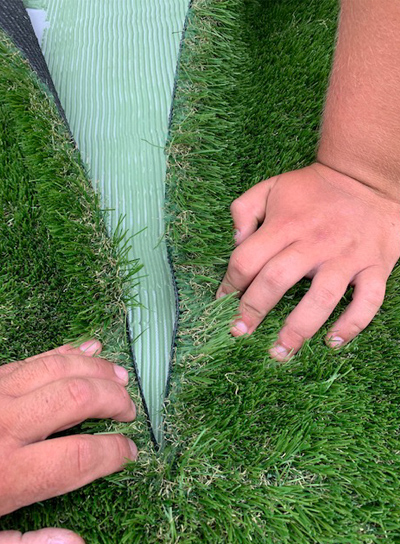
Seaming tape and strong adhesive glue are used at the seams, where pieces of artificial grass come together. AGL Grass lawns skip the infill step, so there is no sand or rubber to spread once the grass is down.
4. Check Your Synthetic Turf Perimeter is Secure
When figuring out how to install artificial grass borders, the turf border edges left earlier will help the perimeter to be better secured and installed. Professionals will use 8″ nylon spikes for your synthetic grass or astro turf installation, as galvanized steel spikes can rust over time.
These nylon landscape spikes should be used every six inches along the border to secure the synthetic grass properly to the perimeters of the lawn. At the seams, 6″ landscape staples should be used to reinforce and “join” the pieces of artificial grass.

5. Enjoy Long-Term Artificial Grass Benefits
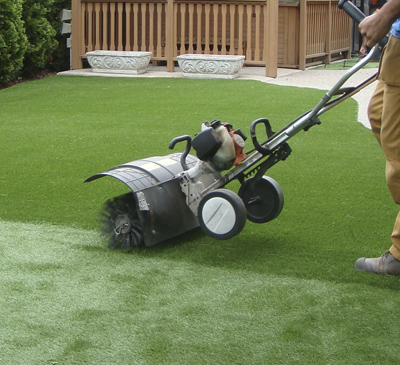
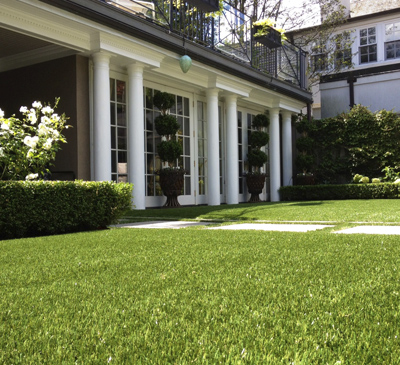
Now that time has finally come to enjoy your new and improved artificial lawn, the last recommendation is to ask your synthetic grass installers about the best maintenance practices to keep your yard looking outstanding year-round. Next-gen artificial grass installations and putting greens resist stains and require little-to-no ongoing maintenance. That being said, if you see debris building up, use a soft-bristled broom, plastic rake, or brush to remove it.
Maximize ROI with Best-in-Class Artificial Grass Installation
Given that even a small North American lawn can cost over $200 to mow and maintain, artificial grass can mean instant savings for property owners. You’ve read this article and, now that you have, maybe you’d rather hire a pro to do the job? Sure! Check out our Artificial Turf Cost Calculator for an idea.
Installing artificial grass since 1989, we know how to get projects done right the first time. With AGL Grass, you don’t just get “fake grass installation”, you get a professionally landscaped lawn.
Contact us to discuss your artificial grass needs, get prices, and find out why we’re the #1 trusted supplier for contractors and homeowners.