


















Updated November 3, 2026
Most dog areas on artificial grass do not need disinfecting, just regular cleaning: pick up solids, rinse the area well with a garden hose, then treat any spot that still smells with a pet-safe enzyme cleaner and rinse again. Brush the blades upright when you are done.
Do you need to disinfect artificial grass?
Usually not. Rain and a hose carry pee down through the backing, and a rinse every few days keeps a pet area fresh. Go further when the grass gets heavy use or something more than everyday mess:
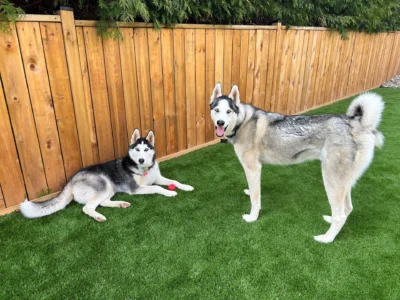
- A dog’s regular potty area
- Kennels, daycares and training facilities, where many dogs use the same space
- After a sick pet: ask your vet what the illness calls for, and ask us before you use a disinfectant or other strong chemical on the grass
AGL Grass landscape grasses are infill-free, so there is no sand or rubber in the grass, and nothing loose to hold dirt or pet waste. Read more about artificial grass with no infill.
How to disinfect artificial turf, step by step
- Pick up solids. Scoop as you would on any lawn.
- Rinse with a garden hose. Soak the area so water runs down through the backing.
- Spot-treat where a smell stays after rinsing: a pet-safe enzyme cleaner (follow its label) or a mild vinegar solution, 1 part white vinegar to 10 parts water.
- Rinse again to wash the cleaner through.
- Brush the blades upright with a stiff broom or an artificial grass brush.
For a smell that keeps coming back, see how to remove dog urine smell from artificial grass. If a spot still smells after a rinse and an enzyme cleaner, ask us to check how the area drains; more on artificial grass drainage for dogs.
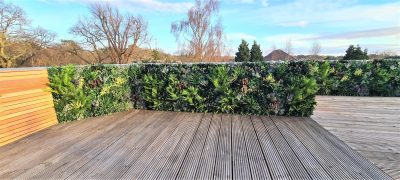
On a balcony or rooftop, the rinse water runs onto the deck below the grass, so rinse toward the drain. More in our guide to artificial grass for apartment dogs.
How often to clean and sanitize artificial grass
| Task | How often |
|---|---|
| Rinse pet areas with a hose | Every few days, or as needed |
| Pick up solids and rinse the spot | As needed |
| Enzyme cleaner or mild vinegar solution on spots that smell | As needed |
| Brush the blades upright | Now and then; more often in high-use areas |
After heavy rain, our guide to cleaning artificial grass after rain covers the quick routines.
What you do not need
No special tools and no bleach. A hose, a stiff broom and a pet-safe enzyme spray or a mild vinegar solution (1 part white vinegar to 10 parts water) handle nearly everything. With no infill, there is nothing to rake or top up.
Before you use any other strong chemical, ask us first. Ask us about the cleaner we use on our own grass.
For the rest of the year’s upkeep, see our artificial grass maintenance guide and our low-maintenance care tips for pet areas.
Kennels, daycares and training facilities
The steps are the same, on a schedule: pick up and rinse through the day, spot-treat as needed, and brush the busiest paths more often. One daycare we installed for put it this way in their Google review:
Any “soft poop” spots rinse away easily with a quick spray from the hose.
4 Paws Tree House Boarding and Daycare
Planning a dog area at home first? Start with a potty area for dogs, or see our pet-friendly artificial grass.
Frequently asked questions
You should not need it. A rinse, then a pet-safe enzyme cleaner or a mild vinegar solution (1 part white vinegar to 10 parts water), handles everyday pet mess. Before using any strong chemical, ask AGL Grass.
Yes, mixed weak: 1 part white vinegar to 10 parts water. Spray it on the spot, then rinse it through with a hose.
Rinse pet areas every few days, or as needed. Use an enzyme cleaner or a mild vinegar solution on spots that still smell after rinsing. Kennels and daycares follow the same steps on a schedule.
Pee drains through the backing, and regular rinsing keeps a pet area fresh. If a smell stays, here is how to remove dog urine smell from artificial grass.
No. A garden hose, a stiff broom and a pet-safe enzyme spray or a mild vinegar solution handle nearly everything.